






What are the risks of teeth whitening and is it safe for enamel?

Properly conducted teeth whitening is one of the safest procedures in cosmetic dentistry. However, specialist supervision and the use of certified preparations are key. The main risk patients may encounter is temporary tooth sensitivity and the possibility of short-term gum irritation, which usually subsides within 24-48 hours. Modern, professional whitening gels have a neutral pH and do not damage or weaken the enamel structure.
The most common side effects of whitening – what you need to know
Although the procedure is safe, we understand you may have concerns. We transparently explain the two most common, temporary symptoms that may occur.
Temporary tooth sensitivity
This is the most common, but completely normal and reversible, side effect. The whitening gel causes temporary “dehydration” of the tooth, which can lead to increased sensitivity to cold or hot stimuli. In practice, this means you might feel short, sharp “zings” of discomfort. This symptom resolves on its own, and we additionally use special fluoride or potassium nitrate preparations to minimise this discomfort and give you peace of mind.
Gum irritation
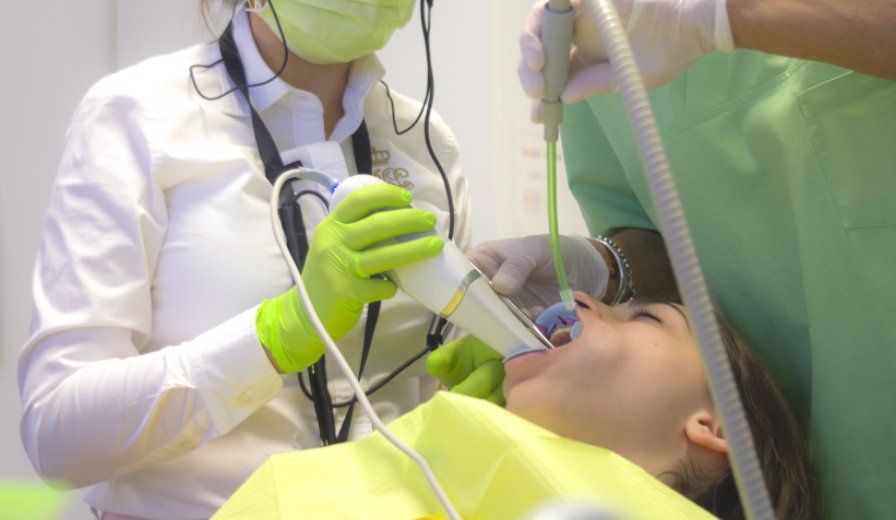
This can occur if the whitening gel comes into contact with soft tissues. With at-home methods, this happens with poorly fitted universal trays. This is precisely why in professional in-office whitening, we place such enormous importance on protection—the dentist applies a special, liquid rubber dam (resin) that precisely isolates each gum, ensuring the gel only works where it is supposed to.
Does teeth whitening damage enamel? Facts and myths
This is one of the biggest and most harmful myths. We emphatically state: professional teeth whitening does not destroy enamel. This myth likely originated from dangerous, DIY home methods (like rubbing baking soda or lemon juice) which are abrasive or acidic and do, in fact, damage enamel. Professional preparations work chemically (through oxidation), not mechanically. Their pH is neutral, so they do not demineralise the teeth. Numerous scientific studies confirm that whitening under a dentist’s supervision is completely safe for the hard tissues of the tooth.
Key precautions – how to avoid complications?
As experts, we guarantee the safety of the procedure, but this requires adherence to strict protocols. Here are the standards that protect our patients:
- Qualification and Interview: This is the absolute foundation. Before we proceed with the treatment, we must treat all cavities and leaking fillings and ensure the gums are perfectly healthy.
- Professional Hygienisation: Whitening can only be performed on perfectly clean teeth. Therefore, the treatment is always preceded by scaling and sandblasting to remove tartar and plaque, which ensures an even result.
- Precise Protection: In the office, we use the aforementioned rubber dam, and for the at-home method, we create perfectly fitted trays that prevent the gel from leaking.
- Adherence to Recommendations: Strictly following the “white diet” and hygiene recommendations after the procedure protects against sensitivity and prolongs the effect.
Who should avoid teeth whitening? Contraindications
Although the procedure is safe, there are certain contraindications that temporarily or permanently exclude its performance. Caring for your health is our priority, which is why we advise against whitening in the following cases:
- Pregnancy and breastfeeding.
- Age under 16-18 years (teeth are not yet fully mineralised).
- Active tooth decay and leaking fillings.
- Acute inflammation of the gums or periodontitis (gum disease).
- Severe tooth sensitivity (requires special preparation).
- Allergy to peroxides or other ingredients in the preparations.
Whitening and sensitive teeth – are they mutually exclusive?
Patients with sensitive teeth often worry about whitening. We understand this. The good news is that sensitive teeth are not an absolute contraindication, but they do require a special protocol. In such cases, we use strategies to minimise risk:
- We start by preparing the teeth, using special pastes and rinses for sensitivity for several weeks.
- We choose the at-home tray method with lower-concentration preparations.
- We shorten the gel application time or take longer breaks between sessions.
Frequently Asked Questions (FAQ)
| Question | Answer |
|---|---|
| 1. What should I do if my teeth are very sensitive after whitening? | You should use specialised pastes and gels for sensitivity (so-called “liquid enamel”). The discomfort usually passes after 24 hours. Avoid very cold and hot drinks during this time. |
| 2. How long does post-whitening sensitivity last? | This is individual, but typically it should not last longer than 1-2 days. |
| 3. Are cheap whitening gels from the internet safe? | We strongly advise against them. These products often have an unknown composition and an acidic pH, which can irreversibly damage enamel. They do not have medical certifications, and using them without a dentist’s supervision (e.g., on teeth with decay) risks serious complications, including pulp inflammation. |
Patient safety is our absolute priority. If you are worried about sensitivity or have doubts about the condition of your enamel, schedule a consultation. We will conduct a full diagnosis, assess the health of your teeth, and select a fully controlled, safe whitening method that will give you peace of mind and a satisfying result.